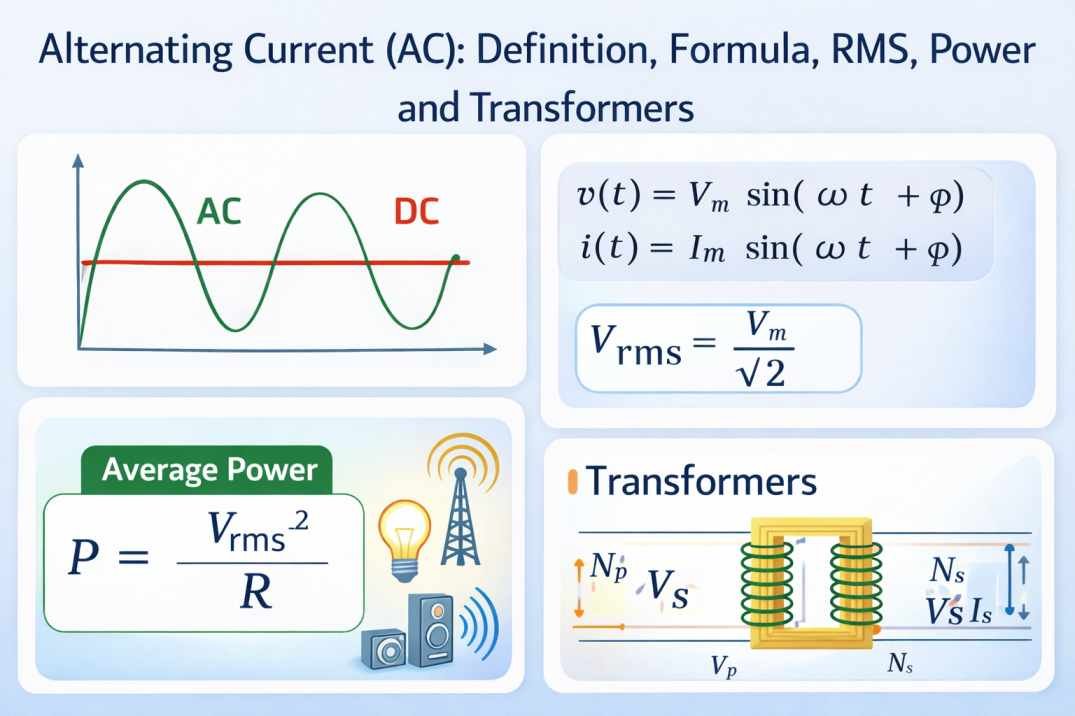
Alternating Current (AC): Definition, Formula, RMS, Power, Phasors, and Transformers Alternating current (AC) is an electric current in which both the magnitude and direction change periodically over time. This is fundamentally different from direct...
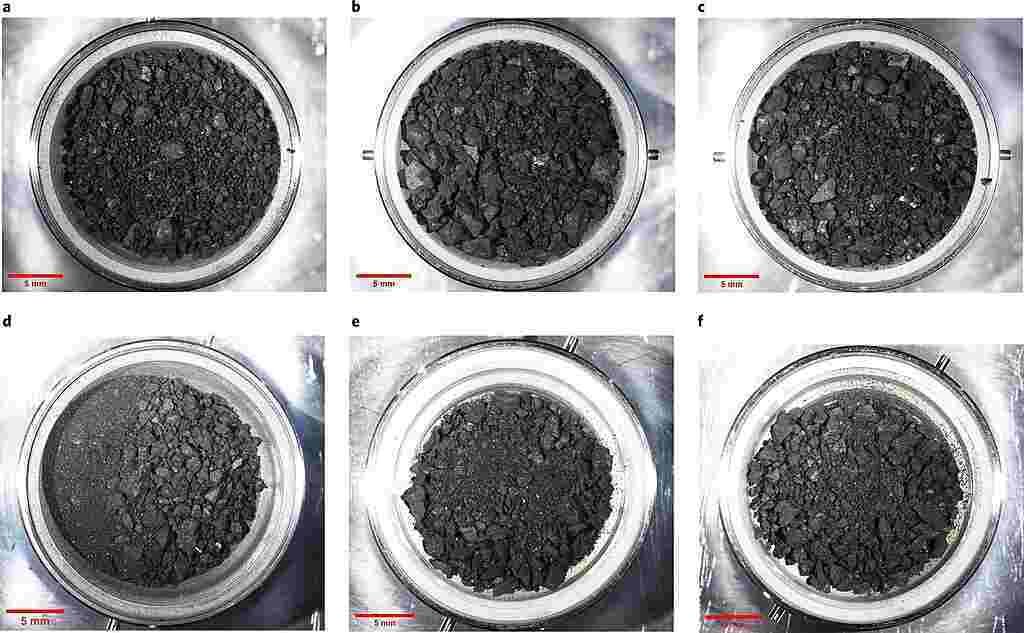
Nearly 20,000 organic compounds have been identified in samples from the asteroid Ryugu, collected by the Japanese Hayabusa2 mission and then repatriated to Earth just over two years ago. Among them: 15 amino acids,...
Heuristics Psychological aspect for qualitative heuristics Heuristics psychological is the process by which humans use mental short cuts to arrive at decisions. Every day, we are inundated with decisions to make: big or small,...
Particle Physics Particle physics is the branch of physics that studies the elementary constituents of matter and radiation, as well as their interactions. It is also called high-energy physics because many elementary particles do...
Where Does Nuclear Radiation Come From? Nuclear radiation or ionizing radiation type is invisible, odorless and tasteless. Therefore, a radioactive emission can only be detected using specific measuring equipment. Radioactivity is a phenomenon that...
What are the effects of nuclear explosions on human health (intentionally or accidentally)? The effects of nuclear explosions on human health cause heat, shock waves and radiation. The forces released have the potential to...
Thermonuclear Thermonuclear refers to the energy released by the thermonuclear reaction. The thermonuclear weapon, nuclear bomb involving thermonuclear energy. (The power of thermonuclear weapons is expressed in megatons.) Also called hydrogen weapon or H...
Nuclear Nuclear energy is a form of energy released by the nucleus, the heart of atoms, made up of protons and neutrons. It can be produced in two ways, by fission – splitting the...
Cyclotron, Synchrocyclotron and Synchrotron (Physics) Particle accelerator physics is widely used in current research. The term “cyclotron” sounds straight out of a science fiction movie. In fact, cyclotrons are particle accelerators, devices that propel...
Understanding Standard Temperature and Pressure (STP) in Chemistry: A Comprehensive What is the standard temperature and pressure condition? This is partially arbitrary conditions for laboratory experiments and measurements in physics and chemistry. Normal temperature:...
Law of Ampere This law was discovered by André-Marie Ampre in 1826, which is included in the laws of electrodynamics and one of Maxwell’s equations. The law of Ampere relates the magnetic field to...
Electrodynamics Electrodynamics or classical electromagnetism is the theory of electromagnetism that was developed throughout the nineteenth century, prominently by James Clerk Maxwell. This theory gives a good description of electromagnetic phenomena as long as...
Planck Constant Planck constant = 6.62607015 × 10⁻³⁴ m2 kg / s Planck’s constant (symbol h), is a fundamental physical constant that characterizes the quantization of nature. Its exact value is extremely small in units of the...
h bar h bar value = 1.05457182 × 10⁻³⁴ m2kg / s The symbol name is ℏ, which means reduced Planck’s constant (ℎ/2π). h with stroke or h strikethrough for what? Planck’s eponymous constant...
Physics Research Fields Contemporary physics research fields are divided into various disciplines that study different aspects of the physical world. They can be broadly divided into nuclear and particle physics; condensed matter physics; atomic,...
Electrical Measuring Instruments: Ammeter, Voltmeter, Ohmmeter, Wattmeter, Multimeter. Measuring current can also be used to estimate your electricity consumption, but also to check the condition of your installation and identify energy losses....
ohmmeter is a measuring instrument that measures the electrical resistance of an electrical component or circuit. The unit of measurement is the ohm, denoted Ω....